
Rules
Enneagram Types Misconceptions: History and Machinery
Enneagram types misconceptions often blur the figure’s history, personality model, and later tools. This guide examines eleven claims by topic.
The phrase “enneagram types misconceptions” captures a dispute about what kind of thing the nine-point system is. Defenders claim an ancient pedigree it lacks; critics attack it as a failed psychometric instrument, which it never claimed to be.
Eleven misconceptions appear below, grouped by whether they concern the history, the machinery, or how a number gets assigned.
What to take away
- The nine-pointed figure and the nine character types have separate histories, and neither is ancient in the way popular accounts suggest.
- The machinery, meaning wings, connecting lines, centers and instincts, is routinely misread as adding types rather than as describing one.
- A number cannot be assigned from outside, and a questionnaire result is a hypothesis rather than a verdict.
The nine types, under their most common English labels: One (Reformer), Two (Helper), Three (Achiever), Four (Individualist), Five (Investigator), Six (Loyalist), Seven (Enthusiast), Eight (Challenger) and Nine (Peacemaker).
About the history
One: it is an ancient tradition. The figure appears in early twentieth-century Fourth Way teaching associated with George Ivanovich Gurdjieff; his student P. D. Ouspensky described it in In Search of the Miraculous, published in 1949. The personality model developed later: Oscar Ichazo taught enneagram-based personality ideas in the 1960s, and Claudio Naranjo further developed and taught related character descriptions in California in the early 1970s. The figure and the nine character types therefore have distinct modern histories. Claims of Sufi, Babylonian or desert-father origin for the combined system are assertions rather than documented lines of descent: Sufi-origin accounts usually trace the symbol to the brotherhoods Gurdjieff wrote about, including the Sarmoung Brotherhood he describes in Meetings with Remarkable Men, and the desert-father version points to the fourth-century monk Evagrius Ponticus and his list of eight thoughts, which is a list of eight and not nine. Neither yields a dated document showing the nine personality types.
From Figure to Personality Types
- Early 20th c.Esoteric teaching in Europe
- Fourth Way eraFigure, not a personality model
- Decades laterNine character types attached
- AfterwardQuestionnaires built
- LaterSpread via business training
Two: it was developed as psychology. The figure and the personality typology came through different stages. Gurdjieff used the figure in Fourth Way teaching; Oscar Ichazo taught a nine-type personality system through his Arica work in the 1960s, and Claudio Naranjo further developed and taught related character descriptions in California in the early 1970s. The current family of approaches grew through workshops, oral teaching and books, then spread through spiritual direction and business training. Later named schools include the Riso-Hudson approach, associated with Don Richard Riso and Russ Hudson. Questionnaires came afterward; named examples include the Riso-Hudson Enneagram Type Indicator (RHETI) and Jerome Wagner’s Wagner Enneagram Personality Style Scales (WEPSS). These instruments belong to particular approaches; they do not turn the model as a whole into a research-based diagnostic. Both are commercial products sold by the publisher behind them, so the price and the report you receive come from that publisher rather than from any licensing body.
Three: the figure encodes a mathematical law. The drawing does have a geometry: the points are numbered around the circle, an inner triangle joins Three, Six and Nine, and the other six points are joined in the order of the repeating decimal 1/7 = 0.142857…, the cycle that Gurdjieff’s teaching called the law of seven and paired with the law of three. Its early teachers gave that geometry a cosmological meaning, and the meaning is part of the tradition’s own account of itself. It is not an independent argument that the nine character descriptions are correct.
About the machinery
Four: the connecting lines mean you turn into another type. They are read as directions a person's pattern moves under strain and under ease. The number does not change. What changes is which expressions of it are showing.
Five: a wing is half of another type. The adjacent points are used to describe a lean, a flavor in one direction. Someone is not part one number and part another, and there is no arithmetic that combines them.
Six: the centers name the emotion you feel most. The three centers are the gut or body center (Eight, Nine and One), the heart center (Two, Three and Four) and the head center (Five, Six and Seven). They describe which governing concern is most active in the pattern, not which emotion a person notices: instinct and anger in the gut, image and feeling in the heart, fear and thinking in the head. Somebody in the fear grouping need not feel frightened often, and often does not.
Seven: the instincts are a second type code. The three are self-preservation, social (the group) and one-to-one, also called sexual or intimate. They describe where energy and attention go first. Practitioners disagree about how firmly the three can be ordered beyond the dominant one, and treating the combination of type and instinct as a fixed code goes past what the material supports.
Eight: one number is better than another. Every point is described with a constructive expression and a defended one. There is no ranking, and no number is the healthy one. A reader who wants a particular number is usually responding to its most flattering description.
About assigning a number
Nine: a questionnaire result is your type. It is a starting hypothesis. The tradition's own instruction is to read all nine descriptions, sit with them, and revise. Recognition here typically arrives as discomfort, which is the opposite of how a pleasing quiz result feels.
Ten: someone who knows you well can tell you your number. The number follows motivation, and the same visible behavior belongs to several points for different reasons. What a friend can see is the part the system treats as least diagnostic, which is why the treatment of the nine puts self-identification at the center. The equivalent problem in the four-letter Myers-Briggs Type Indicator (MBTI) system has the same shape.
Eleven: it can be validated the way a test is validated. Some instruments built on the model have been studied, and that is a claim about those instruments. General discussions of personality testing set out what validating a measure involves, and the model as a whole was not built that way and does not present itself that way. Describing it as a framework for self-examination is accurate; describing it as a diagnostic is not, and neither is dismissing it for failing a test it never sat.
The pattern
| Group | The move | Why it persists |
|---|---|---|
| History | A modern synthesis is given an ancient pedigree | Antiquity reads as authority |
| Machinery | Modifiers are read as extra types | The layers are genuinely complicated |
| Assignment | A result or an observation is treated as the answer | Self-identification is slow and uncomfortable |
The three groups support each other. A reader who believes the system is ancient will take a questionnaire result as a reading of something old and settled, and will be readier to accept a number from someone else. Loosening any one of the three usually loosens the rest.
Three Misconception Groups
History
- The move
- Modern synthesis given ancient pedigree
- Why it persists
- Antiquity reads as authority
- Loosening it
- Loosens the rest
Machinery
- The move
- Modifiers read as extra types
- Why it persists
- Layers genuinely complicated
- Loosening it
- Loosens the rest
Assignment
- The move
- Result treated as the answer
- Why it persists
- Self-identification slow, uncomfortable
- Loosening it
- Loosens the rest
What survives
A framework for noticing a habit of attention in yourself: what you treat as the danger, what you reach for, and what it costs. That is a modest and workable aim, it is what experienced teachers say the material is for, and it does not require the history to be old or the questionnaires to be validated.
The uses that fail are the ones that point it at other people: the pairing ratings that treat two numbers as a compatibility score, and the lists that assign numbers to public figures from a distance. The same objection applies to the compatibility charts built on four-letter types.
Where star profiles repeat the pattern
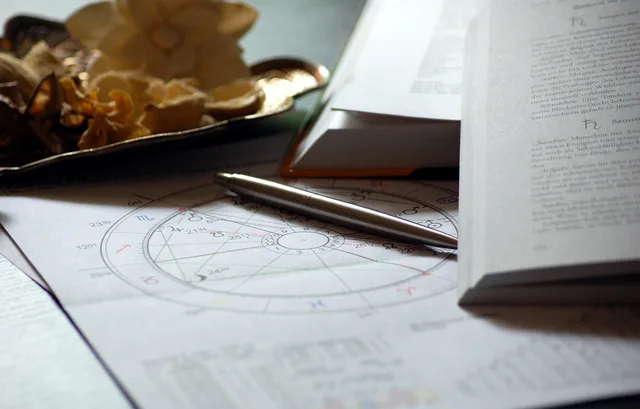
Celebrity profiles run into the same three mistakes. A Sun-sign reading is drawn from a single date, usually with no birth time, so the Moon and the rising sign — the placements a chart reader would want next — are missing. An Enneagram number assigned to a public figure is read off interviews, which is the behavior the model treats as least diagnostic.
Both arrive as settled verdicts about someone the writer has never met. The honest version of either states its inputs: which birth record, which placements, which instrument, which school’s labels. A profile that names none of them has skipped the only part a reader can check.
Common questions
Is the system worthless because the history is modern?
No. Age is not evidence either way. The reason to be careful about the history is that a false pedigree is used to close arguments the material cannot close on its own.
Can my number change over a lifetime?
Most teachers say the pattern is stable and its expression changes. Some people revise their number after years, which is usually described as having identified it wrongly at first.
Which questionnaire is the best one?
Named examples include the Riso-Hudson Enneagram Type Indicator (RHETI) and Jerome Wagner’s Wagner Enneagram Personality Style Scales (WEPSS). They differ by school and none of them settles the question. Whichever you use, the reading afterward is what determines the answer.
Why does everyone want to be a Four or a Five?
Because those descriptions read as distinctive and thoughtful in summary form. The defended versions of both are considerably less appealing, and reading those is part of the work.
Is it compatible with a four-letter type system?
They describe different objects: one what a person is organized around, the other how they prefer to perceive and decide. People use both, and neither validates the other.